



Hartig Forest Trail
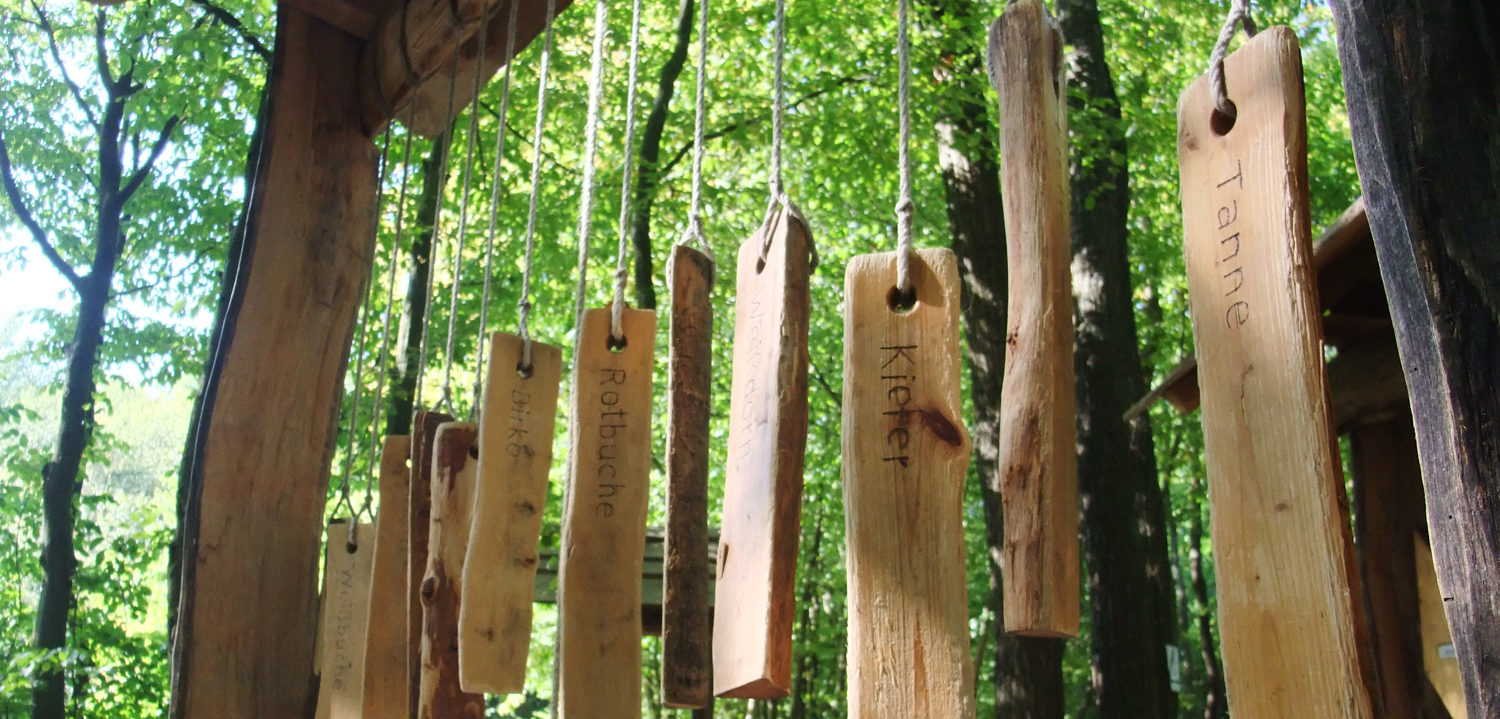
Today we are conscious of the forest as a habitat for a wide variety of species, a place for many types of recreational activities and the source of the raw material wood. The Hartig Forest Trail shows the interrelations between people and forests in vivid examples. Historic forest use and cultivation types are introduced and visitors are invited to experience them physically wherever possible.
Today, Hesse is a state rich in forests, but this is not a matter of course. In 1707, a forest warden from Büdingen reported that his forest consisted only of weeds and hedges. Our forest trail shows how the woods used to be exploited and explains what led to the destruction of many wooded areas. To counter these developments, Georg Ludwig Hartig devised the principle of sustainable foresting, which limits the amount of wood taken from a forest to the amount that the forest can sustainably regrow. Today, we see the result of his efforts in Hesse and all over Germany: continuous wooded areas characterized by diverse vegetation.
The forest trail is a playful introduction to the various types of trees and wood and their respective uses, but also to the animals indigenous to Germany’s forests, such as the spotted woodpecker, the red kite, the lynx or the wild boar.
Furthermore, visitors learn about forestry and many uses of woodlands no longer practiced today: oak bark was used for tanning, foliage as bedding in stables, pigs, cattle, sheep and goats were put out to graze in the forests, root stocks were used in tar making, herbs in medicine. A number of hands-on elements such as sensory boxes, smelling stations and the xylophone were set up with children and adolescents in mind especially.
In addition, thinking stones or stumbling blocks encourage the visitors to reflect on wood and energy use. The Hartig Forest Trail thus touches not only on historic topics but also deals with current and future-oriented concerns.
You are currently viewing a placeholder content from Google Maps. To access the actual content, click the button below. Please note that doing so will share data with third-party providers.
More InformationYou need to load content from reCAPTCHA to submit the form. Please note that doing so will share data with third-party providers.
More InformationYou need to load content from reCAPTCHA to submit the form. Please note that doing so will share data with third-party providers.
More InformationYou are currently viewing a placeholder content from Turnstile. To access the actual content, click the button below. Please note that doing so will share data with third-party providers.
More InformationYou are currently viewing a placeholder content from Facebook. To access the actual content, click the button below. Please note that doing so will share data with third-party providers.
More InformationYou are currently viewing a placeholder content from Instagram. To access the actual content, click the button below. Please note that doing so will share data with third-party providers.
More InformationYou are currently viewing a placeholder content from Instagram. To access the actual content, click the button below. Please note that doing so will share data with third-party providers.
More InformationYou are currently viewing a placeholder content from X. To access the actual content, click the button below. Please note that doing so will share data with third-party providers.
More Information