



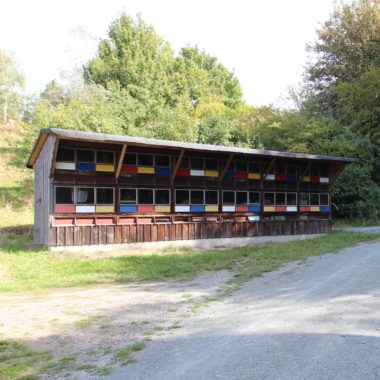
Bee Keeping
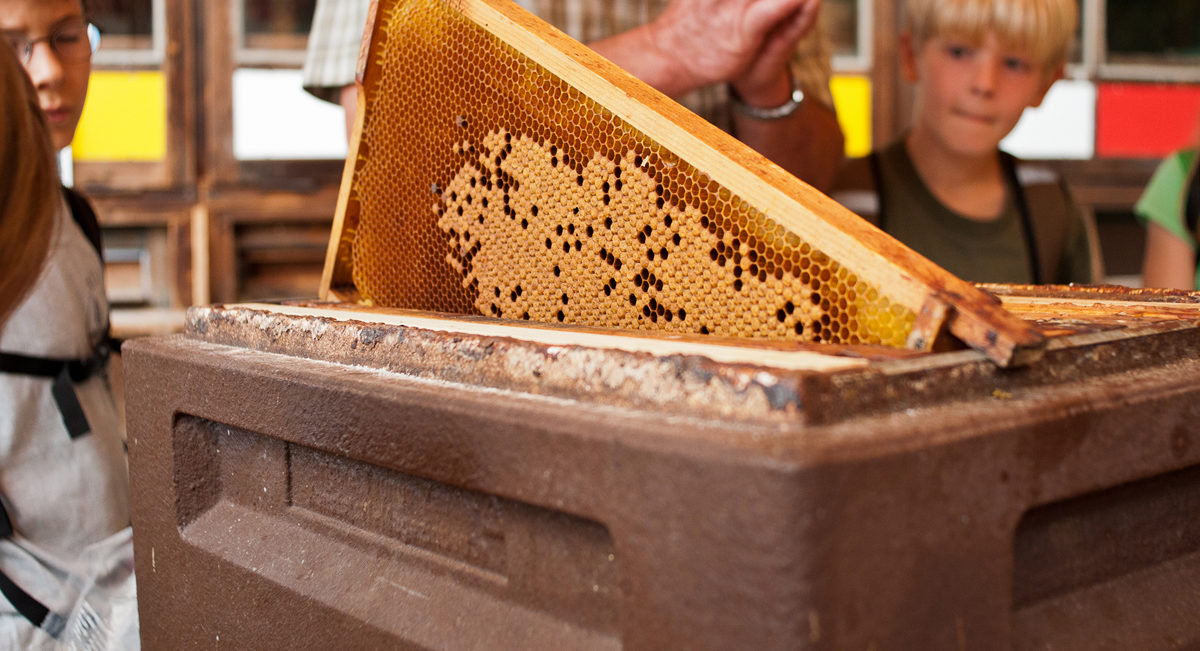
Prehistoric rock art shows the extent of human’s interest in beekeeping. Honey was thought to be a medicine and an aphrodisiac for centuries, and it was used as a sweetener long before cane sugar or industrially refined beet sugar came along. Beeswax was used to make candles. It is known that beekeeping as a branch of animal husbandry was practiced even in antiquity. In forest beekeeping, the beekeepers, known as Zeidler in German, used to cut hollows into trees as a place for wild bees to nest. Later, they would harvest the wild bees’ honey and wax from high up in the trees. At the same time, domestic beekeeping in hollowed-out wooden blocks, known as bee gums, and in woven-straw skeps began to develop. The Luneburg skep remains the symbol of beekeeping to this very day.
In Hesse, beekeeping was and is most often only a supplementary income. Apart from farmers, it was clergy and teachers who most often had their own bee colonies. They were frequently responsible for innovations in beekeeping, simplifying what used to be a much more time and labour intensive activity than it is today. Modern beekeeping has its origin in the mid-19th century, when many inventions, such as moveable-frame hives, honey centrifuges and finally the Langstroth hive, all of which are commonly used throughout the world today, first came up.
You are currently viewing a placeholder content from Google Maps. To access the actual content, click the button below. Please note that doing so will share data with third-party providers.
More InformationMore links
You need to load content from reCAPTCHA to submit the form. Please note that doing so will share data with third-party providers.
More InformationYou need to load content from reCAPTCHA to submit the form. Please note that doing so will share data with third-party providers.
More InformationYou are currently viewing a placeholder content from Turnstile. To access the actual content, click the button below. Please note that doing so will share data with third-party providers.
More InformationYou are currently viewing a placeholder content from Facebook. To access the actual content, click the button below. Please note that doing so will share data with third-party providers.
More InformationYou are currently viewing a placeholder content from Instagram. To access the actual content, click the button below. Please note that doing so will share data with third-party providers.
More InformationYou are currently viewing a placeholder content from Instagram. To access the actual content, click the button below. Please note that doing so will share data with third-party providers.
More InformationYou are currently viewing a placeholder content from X. To access the actual content, click the button below. Please note that doing so will share data with third-party providers.
More Information