



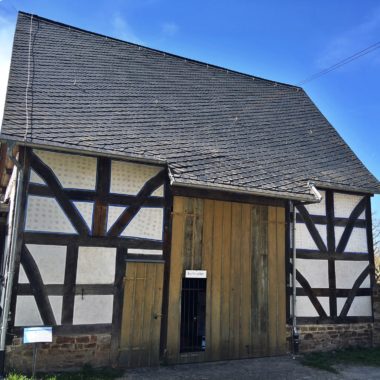
Basket-Weaving
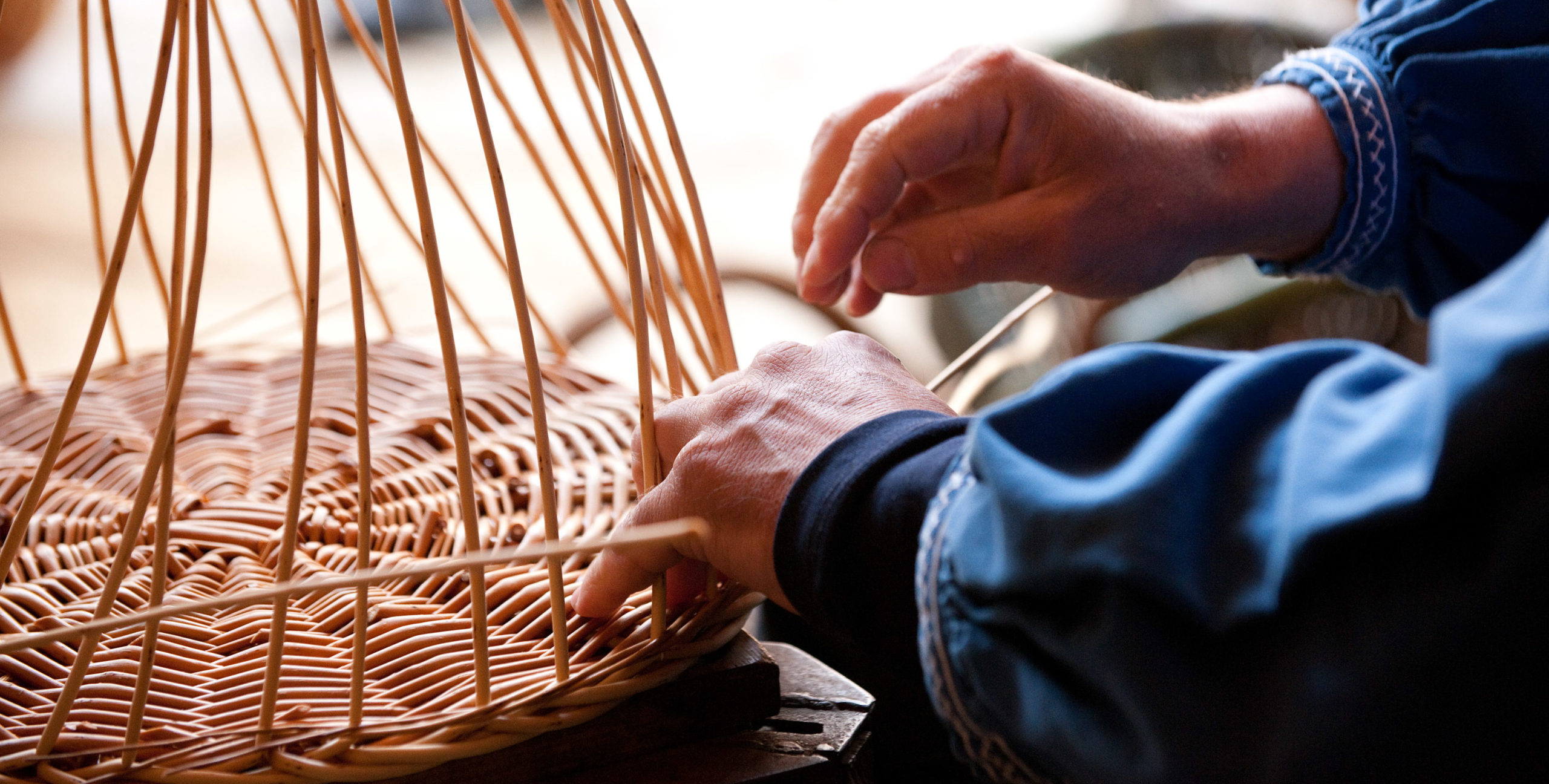
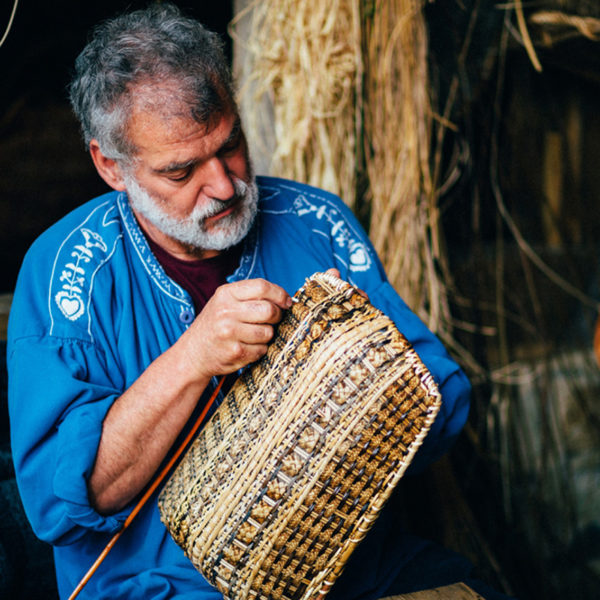
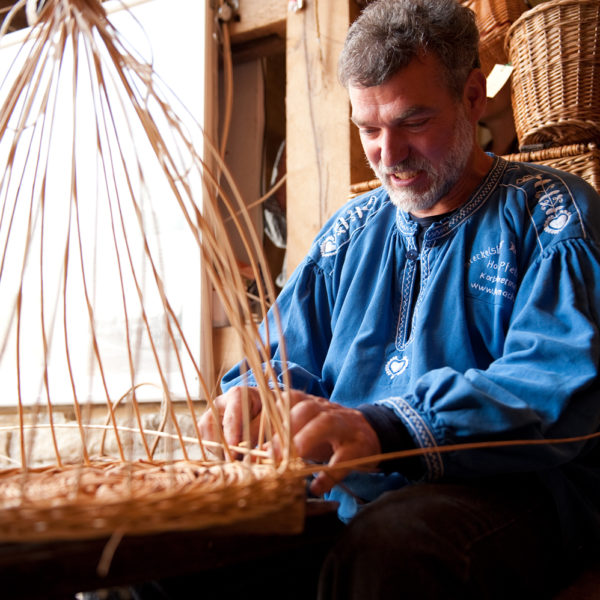
A wide selection of storage and transport containers was necessary for the various farming and household chores. Light and sturdy baskets were perfectly suited, and different shapes developed depending on the intended use. Unpeeled wicker rods with green, brown or black bark were chosen for making containers for the field or stable work, but also as storage containers in the home. Laundry, sewing and bread baskets, on the other hand, were usually made of peeled and bleached white rods.
For both raw materials, the preparations took great effort. The weaver harvested the pliable thin rods from trees growing in the wild, along rivers and brooks, or from coppice willows. However, only large farmsteads or entire villages were able to afford proper coppices. Coppices are started with 30cm-long rods. As the willows are repeatedly cut back to the same height, over time they develop the heads typical of basket willows. Small side offshoots were cut off the rods with a knife. Some of the rods were peeled and then leaned against the outside wall of a building to dry. This, however, reduced their pliability, and to regain it they were watered before weaving. They were put into hot water for a couple of hours, three weeks in a tub with cold water, or, tied into a bundle, up to five weeks in a brook.
Only rarely did basket weavers have their own workshops. They were seasonal day labourers, working outside in summer and in the kitchen or parlour in the winter.
You are currently viewing a placeholder content from Google Maps. To access the actual content, click the button below. Please note that doing so will share data with third-party providers.
More InformationMore links
You need to load content from reCAPTCHA to submit the form. Please note that doing so will share data with third-party providers.
More InformationYou need to load content from reCAPTCHA to submit the form. Please note that doing so will share data with third-party providers.
More InformationYou are currently viewing a placeholder content from Turnstile. To access the actual content, click the button below. Please note that doing so will share data with third-party providers.
More InformationYou are currently viewing a placeholder content from Facebook. To access the actual content, click the button below. Please note that doing so will share data with third-party providers.
More InformationYou are currently viewing a placeholder content from Instagram. To access the actual content, click the button below. Please note that doing so will share data with third-party providers.
More InformationYou are currently viewing a placeholder content from Instagram. To access the actual content, click the button below. Please note that doing so will share data with third-party providers.
More InformationYou are currently viewing a placeholder content from X. To access the actual content, click the button below. Please note that doing so will share data with third-party providers.
More Information